

Introduction
The mutual collaboration, fragmentation, and further emergence of new groups among ethnic-based revolutionary forces, local defense forces, and political-military forces in Myanmar have been seen from the start of the coup until today. “Similar occurrences have also existed within the current Mon revolution, and under such conditions, a new armed group named the ‘Mon Blood Army’ has emerged.”
The emergence of the Mon Blood Army has raised questions along with interest among Mon revolutionary forces. In particular, the proximity of this group’s leaders to the New Mon State Party (NMSP), the lack of clarity regarding what kind of relationship exists with current revolutionary forces, and the further formation of a new group at a time when other Mon revolutionary forces already exist could have an impact upon the Mon political and military landscape.”
- A Youth-Led Youth Army
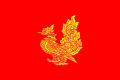
According to a report by the Independent Mon News Agency (IMNA), the Mon Blood Army was initially formed on December 28, 2025—which is Mon Youth Day—with Mon youth aged between 18 and 35 years old.[1]However, the public only began to know about the Mon Blood Army around February of this year. On March 8, the Mon Blood Army began inviting new comrades. According to that invitation, it was stated to be an organization being built with the objective for “Mon youth themselves to lead and take charge to eradicate the military dictatorship.”[2]
Subsequently, on March 18, the Mon Blood Army released [information regarding]a Leading Command Committee, an Information and Intelligence Committee, a Research Committee, and a Food/Logistics Committee.[3]
Because the Mon people usually use “Nai” and “Min” in front of names to differentiate between older and younger men, it is understood that the leaders of the Army are youth between the ages of 18 and 35 according to the Mon Youth Policy. “As the Mon Blood Army is fully a youth army, it will be led only by youth,” Min Yawd Sanon, a spokesperson for the Army, told the Independent Mon News Agency (IMNA).
In addition, “Military affairs will be prioritized over politics, and because human resources and weaponry are currently still weak, [we/the group] will fight using a guerrilla system alongside other allied forces,” Min Yawd Sanon continued to say.
The Mon Blood Army is carrying out military movements alongside revolutionary allies on the Ye-Thanbyuzayat road section of Union Highway No. 8.
- Has Collaboration with Mon Revolutionary Forces Already Begun?
On April 4, 2026, the Mon Blood Army initially released an account of a military movement, and on May 6, it further released its military movements spanning a one-month period.[4] According to that statement, it indicated that [the group]attacked Artillery Battalion No. 316 with rockets, conducted security operations around the Union Highway, and attacked a military column from Light Infantry Battalion (LIB) 106 alongside allied joint forces.
In particular, concerning the battle that took place between Aung Tharyar and Kanin Kamawt villages on April 28, 2026, the Army released a statement that the Mon Blood Army also participated and fought alongside the Ramonnya Mon Army (RMA), Mon State Revolutionary Force (MSRF), and Battalion 8001–Ye Guerrilla Force.
However, regarding the aforementioned battle, it is observed that the Mon Blood Army was not included or mentioned in the statements of the RMA[5] and MSRF.[6] Only in the statement of Battalion 8001–Ye Guerrilla Force was the Mon Blood Army (MBA) included and mentioned.[7]Therefore, it raises questions regarding the Mon Blood Army’s ground-level joint military role, inter-unit relationships, and alliance recognition.
- Could Power Rivalry Occur Within the Mon Revolutionary Landscape?
Looking at the leading organizational structure of the Mon Blood Army, the inclusion of individuals who have been previously associated with the New Mon State Party (NMSP) is noteworthy. In particular, the leader Min Chan Lwei is the son of Nai Hanthar, the current Chairman of the New Mon State Party (NMSP), and the military leader Min Arkar is also someone who previously served as Nai Hanthar’s personal staff officer.[8] Currently, the New Mon State Party (NMSP) is an organization that continues to maintain a relationship with the coup military junta based on the Nationwide Ceasefire Agreement (NCA).
If the emergence of the Mon Blood Army was due to the stance of the New Mon State Party, it raises the question: why did they not join together with the anti-military dictatorship faction (NMSP-AD) that split from within the New Mon State Party during the past year of 2025?[2] In revolution, there is no such thing as being early or late. Although the Mon Blood Army possesses political bases that would allow them to collaborate with the NMSP-AD, its standing as a separate organization demonstrates that differences in trust, leadership, and strategy still exist among Mon revolutionary forces.
Furthermore, at a time when the RMA, MSRF, and locally-based forces already exist in the Mon region, the further emergence of a new group like the Mon Blood Army is seen as a situation that could lead to the fragmentation of strength among Mon revolutionary forces.
Conclusion
In summary, although the emergence of the Mon Blood Army represents the appearance of a new anti-military dictatorship organization within the Mon region, the group’s long-term sustainability, ground-level military capability, and alliance relations remain in a condition that still requires continuous monitoring.
Furthermore, the increasing proliferation of organizations within the Mon political and military landscape could complicate cooperation and coordination among anti-military dictatorship forces, resulting in the fragmentation of strength. However, the rising desire of Mon youth to participate in political and military roles against the military dictatorship is also visible through the emergence of the Mon Blood Army.
Therefore, under the common objective of opposing the military dictatorship, Mon revolutionary forces must make special efforts to increasingly establish political and military coordination. In particular, being able to implement unity and common directions among Mon revolutionary groups under a shared political framework, such as a Mon Revolutionary Charter, could become vital for the future of the Mon revolution. Otherwise, it is analyzed and presented that the further differentiation of organizations and rising leadership rivalries could weaken the collective strength of the Mon revolution, bringing about impacts on the long-term political future of the Mon region.
[1] Independent Mon, April 10, 2026: “Mon National Army” says it will prioritize military affairs over politics.Independentmonnewsagency
[2] Mon Blood Army, March 8, 2026: New recruit announcement (Fight to overthrow the military dictatorship).https://www.facebook.com/share/p/1B9KmaVbKk/
[3] Policy regarding the appointment of flag officers for the Blood Army. https://www.facebook.com/share/p/1A6AMz1S5c/
[4] Mon Blood Army, May 6, 2026: One-Month Military Operations Statement. https://www.facebook.com/share/v/17Uut948Zi/
[5] RMA-Ramonnya Mon Army, May 1, 2026: Battle news release.
[6] Mon State Revolutionary Force – MSRF, May 1, 2026: Battle News Release.https://www.facebook.com/share/p/1Acp6wYSiP/
[7] Ye Guerrilla Force, May 3, 2026: Ambush with mines against an enemy column of approximately (100) personnel. https://t.me/ygf1221/322
[8] New Mon State Party, February 15, 2024: Chairman Nai Honsa was honored and awarded the Wirahongsa Head Monk (Bo Lay Ah Kar seen at the ceremony honoring and awarding Chairman Nai Honsa of the New Mon State Party with the Wirahongsa title).


